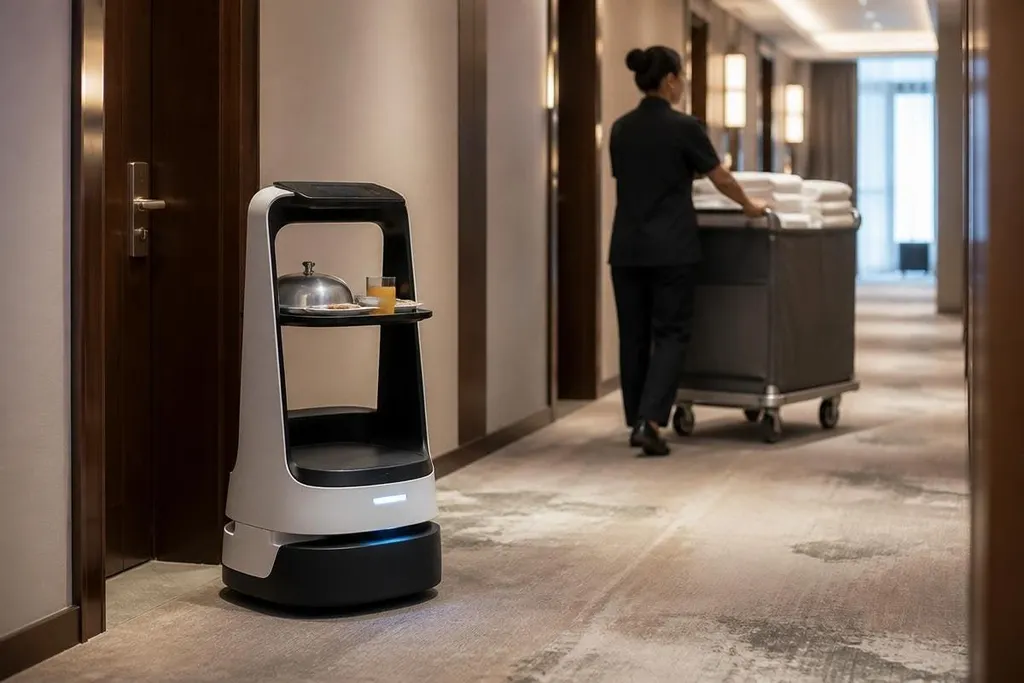
A hotel robot can carry room service, move clean towels, guide guests through a lobby, or clean shared areas. The business opportunity sits around those tasks: buying the robot, running it, maintaining it, and fitting it into hotel work.
Quick read
- Delivery robots can support room-service and supply runs.
- Service firms can earn from leasing, remote monitoring, repairs, and software.
- Hotels still need people for guest care, exceptions, and safety checks.
The first opportunity is task-based automation
Hotels have many short jobs that repeat across a shift. A delivery robot may carry room-service food upstairs, while a transport robot may move linen, towels, or waste between floors.
That creates a clear sales path. A hotel buyer can start with one task instead of buying a wide automation plan. The supplier then needs to show the full work cycle: where the robot starts, how it calls an elevator, who loads it, who receives the item, and where it charges.
Cleaning offers another route. A floor-cleaning robot can work in a lobby, corridor, or other open area while staff handle bathrooms, rooms, and places that need close judgment. The value depends on floor design, traffic, noise limits, and how often a person must step in.
Showroom performance proves little if the robot stops at every chair. The sale depends on the building.
Services may bring steadier income
The machine is only one part of the purchase. Hotels also need site setup, staff training, fleet software, spare parts, repairs, and remote help when a robot stops near a lift or blocked corridor.
That supports several business models. Leasing lets the hotel pay a regular fee instead of buying the machine upfront. A robot operations company can supply, schedule, charge, and check the robot. Technicians can handle batteries, wheels, sensors, doors, and docking stations, while integration teams link the robot with elevators, hotel systems, room-service tools, and access controls. Training firms can teach hotel staff loading, emergency stops, cleaning, and recovery steps.
A service contract also gives suppliers a reason to design for repair. Parts that can be changed on site matter more than a polished demo when a hotel needs the robot working during a busy evening.
When you compare those contracts, hotel robotics business reports can put supplier claims beside named companies, machines, and reported deployments before guest service sets the limit.
Guest service sets the limit
Hotels sell attention as well as beds. A robot can carry an order, but a person may still need to answer a guest’s question, handle a complaint, or deal with a delivery that reaches the wrong room.
That leaves room for companies that pair robots with staff. The robot handles movement. Hotel employees manage judgment, care, and unusual cases. A business that removes every human step would need to prove that guests accept the change and that the hotel can keep service quality steady.
Privacy and safety add more work. A robot moving through guest areas may need cameras, microphones, access rules, and a clear process for stored data.
Operators also need routes that keep people away from moving parts and a way to stop the robot quickly. The unproven point is repeat use across different hotel buildings.
A system that works in a wide, modern lobby may need new maps, software settings, and staff routines in an older property.
Who should pay, and for what?
The buyer should start with a task that has a clear owner and a clear measure. Room-service delivery could be measured by delivery time and staff walking time. Floor cleaning could be measured by covered area and the number of manual passes still needed.
I’d fund hotel-robot companies that sell a measured service, not a machine looking for a task.
Use this check before signing a contract:
- Name the task, route, and shift the robot will cover.
- Record who loads, unloads, charges, and stops it.
- Test elevators, doors, ramps, Wi-Fi, and guest access rules.
- Price staff time, repairs, software, training, and replacement parts.
- Set a result for the pilot, such as completed deliveries per shift.
The next business opportunity will belong to firms that can repeat this process across hotel types while showing exactly where people remain needed. A robot that saves a walk is useful; a service that proves the saved work pays for itself is what a hotel can buy.